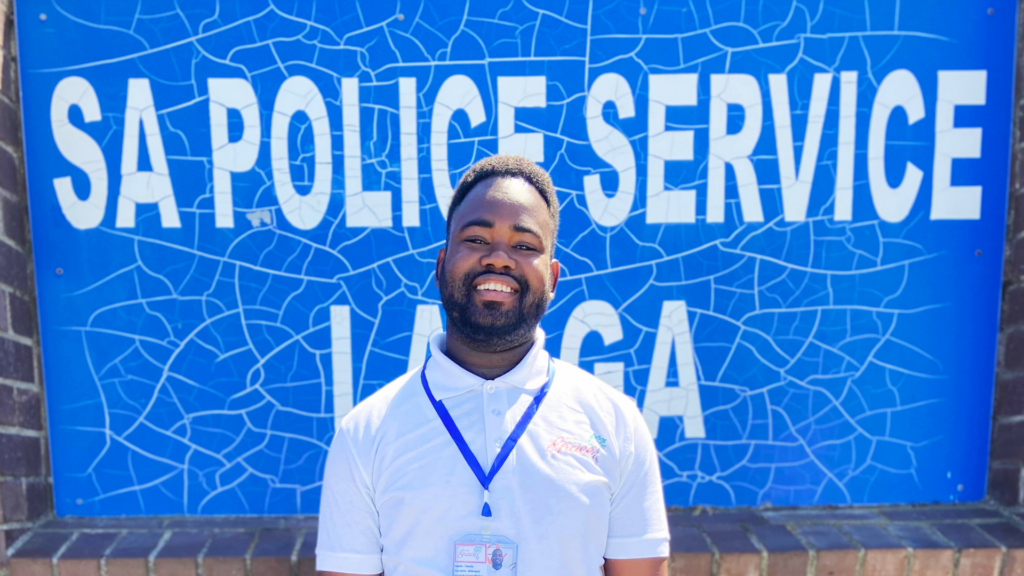
Breaking the Cycle: How a Trauma-Informed Approach is Empowering the Langa Community

Langa has a long history of cultural and societal trauma; deeply steeped in a cycle of poverty. The community is battling high unemployment rates, instances of substance abuse, and crime. The aftermath of the COVID-19 lockdown further exacerbated the problems, and we are currently seeing a society living within the grips of trauma – normalising heinous crimes such as gender-based violence and rape. The trauma-informed approach to social work and counselling calls for a re-education of society, hoping that awareness might play a role in ending the cycle of abuse.

Using a Trauma-informed Approach to Promote Healing

The concept of a trauma-informed approach relies on four basic principles; that an organisation or programme –

  • realises the widespread impact of trauma and understands potential paths for recovery;
  • recognises the signs and symptoms of trauma in all involved within the system;
  • responds by fully integrating knowledge about trauma into policies, procedures, and practices;
  • seeks to resist re-traumatisation actively.

The trauma-informed approach is designed to reduce the risk of re-traumatisation and thus – hopefully – end the cycle of abuse by empowering people with knowledge and self-awareness. Although there is no prescribed policy for a trauma-informed approach, six general principles promote recovery and resilience for individuals impacted by trauma:

Safety – Staff and beneficiaries should feel physically and psychologically safe.

Trustworthiness and transparency – Organisations should build trust through transparency when working with beneficiaries, family members and staff.

Peer support – Support from other trauma survivors helps a survivor establish safety and hope, build trust, enhance collaboration and share experiences to promote recovery and healing.

Collaboration – Sharing power and decision-making within an organisation creates a more resilient organisation; likewise, purposefully levelling the power dynamics between beneficiaries and staff contributes to safety and healing. Beneficiaries take on greater responsibility for their recovery.

Voice and choice – Shared decision-making promotes goal-setting and self-advocacy. Staff become facilitators of recovery rather than controlling the process.

Cultural, historical and gender issues – It is essential to acknowledge the survivor’s racial, ethnic and cultural identity, recognising and addressing trauma stemming from a survivor’s lived experiences.

tHE TRAUMA-INFORMED APPROACH AND OUR PROGRAMMES

The Victim Empowerment Programme at Just Grace incorporates these principles within each case. Everyone is treated with professionalism and the utmost respect and care; our social workers focus on creating a safe environment where the counselee feels comfortable sharing. It’s essential that the person feels empowered throughout the healing process; hence, our social workers do not adopt an “instructional” approach (telling the victim what to do) but rather encourage the victim to play an active role in deciding the steps forward. This approach enables the victim to take responsibility for their healing while also becoming aware of the power they have in moving forward. With such an awareness, it is hoped that the victim might be able to break the cycle of abuse because they ultimately know that a better future is possible. To find freedom, it is essential to include the victim’s family in this process, as this will not only help extend the impact of healing but could have further implications within the community.

Each family facing and overcoming abusive obstacles becomes a role model to others. Such support is vital for meaningful impact within a community like Langa. This multidimensional approach forms a foundational value for much of the Just Grace work. Ultimately, the Just Grace social workers work hard to empower their clients through awareness and education, helping them (and their loved ones) make informed decisions that further their healing process. The more informed one is, the less likely one will be to return to an abusive or traumatic situation, thus, ending the cycle.

The trauma-informed approach lays the foundational core of Just Grace as an organisation, forming an essential part of the organisational culture and identity. If our work is going to truly make a meaningful impact, we need to be seen as a trustworthy partner with whom the local community wants to co-labour.

We offer a multidimensional intervention approach with local relevance to make the most significant impact. The programmes offered are a long-term commitment, sowing seeds into the community, which we trust will grow into a generational legacy.

” The most crucial aspect of therapy is the development of a good therapeutic alliance with a therapist who is trauma-informed… With this we create a place of safety where we offer information, make sure our clients are grounded, feel empowered, have a way to regulate emotions and feel cared for and respected.”

― Teresa Naseba Marsh

(Psychotherapist and Author)

Prioritising Mental Well-being in South Africa’s Youth: Just Grace’s Upliftment Programmes

Now, possibly more than ever, mental well-being is coming to the fore of global concern: our post-COVID-19 world is struggling to find its economic and social equilibrium. The uncertainty casts a shadow as people try to navigate their futures in such fear-filled times.

At-risk groups

Those especially at-risk are young people between the ages of 15 – 30. According to a recent survey conducted by UNICEF 73% of the South African youth surveyed felt they had struggled with mental well-being issues in the past year. 57% of those respondents cited “Succeeding in education, the need for work skills, training and employment opportunities” as their greatest concerns. The youth of Langa are no different, facing similar challenges as their global counterparts who also live in adverse environments. The need for social upliftment programmes underpinned by mental well-being is obvious.

mental well-being

Mental well-being is a state that enables people to cope with the stresses of life, realise their abilities, learn well and work effectively, and contribute to their community. It is an integral component of health and well-being that underpins our individual and collective abilities to make decisions, build relationships and shape our world. Mental well-being is a basic human right. And it is crucial to personal, community and socio-economic development.

In essence, mental well-being is one’s ability to live a full, satisfying life in which one copes with adversity. However, this may seem simpler in theory than application, depending on one’s environment and socio-economic situation.

THE LITERATURE

A new research paper shows that more than a quarter of South Africans suffer from depression, with higher levels in certain provinces. The Western Cape is featured in the top 3 problematic provinces. Major adversely contributing factors include negative childhood experiences, socio-economic status, geographic location, age and education level. The study explains how adverse childhood experiences (such as abuse, neglect or household violence) form a potential foundation for negative mental well-being and poor physical health. Add a sub-par education, and a child is now facing a rather bleak future, at greater risk of being caught in a cycle of poverty or abuse. According to this report, young adults in low-economic urban areas, such as Langa Township, are at a higher risk than their rural counterparts – and more susceptible to depression.

MENTAL WELL-BEING AND OUR PROGRAMMES

Each of the Just Grace programmes is structured so that youth are empowered with mental well-being tools and any barriers to mental well-being are addressed.

In addition, they are also equipped in a practical sense – giving them skills that will enable them to make a difference in their lives and help them to become more engaged within the community.

However, it’s not enough to impart skills (be they academic or professionally related); one must seek to engage in deep reflective, critical learning processes that challenge the prevalent mindset of the participants.

The Qhubeka! Youth Development Programme uses group activities that stimulate creative thinking skills and self-awareness; the discussions and debates of the book club validate participant opinions and build confidence; the holiday club is both fun and expands the participants’ view of the world and potential opportunities; job shadowing for grade 11 learners gives them insight into possible future careers and develops a sense of hope and optimism for the future. By presenting new opportunities and providing opportunities for lateral development, this programme not only sees an improvement in participants’ academic results, but also young people whose horizons have broadened, have developed critical thinking skills and perhaps most encouragingly, have developed the grit required to face life and overcome personal and social obstacles.

The Phakama! Youth Activation Programme works with young people between the ages of 17 – 35, and aims to re-engage at-risk youth within the community by offering both professional and personal development skills. While the professional development equips the participants with valuable skills such as writing a successful CV, understanding workplace etiquette and interview skills, it’s the personal development skills they gain which gives them the mental edge when looking for employment – these young people have hope and motivation.

The Empilweni! Thriving Communities Programme also offers both practical and metacognitive skills development opportunities through psychosocial support.

Participants gain practical skills to assist them in overcoming struggles, yet this programme also encourages participants to evaluate their mindsets: how their personal biases impact their worldview and hinder their growth. Key skills that improve mental well-being are addressed within a family-focused environment, meaning a sense of community is built and a legacy is left as whole families find healing.

Participants of such programmes gain practical skills that will help them improve their social and economic situations, and perhaps more importantly, gain the confidence and improved mental well-being that will enable them to make a difference within their community. Experience shows that the Just Grace programme alumni are more equipped that their peers at navigating life’s challenges as they have been given the tools to persevere, find support in their community and to encourage others to follow suit.

Overcoming the potholes of the South African education system through inclusive programmes

While the South African education system has come under fire several times over the past few years, the COVID-inspired hard lockdowns of 2020 have exposed further cracks. These include – but are not limited to – a high dropout rate, alarmingly high illiteracy levels and consequent poor academic performance. One may question whether the traditional education system is designed to adequately prepare young people (especially the marginalised youth living in adverse environments like townships) for their futures in the workplace. Sadly, it seems futile to wait for governmental intervention, which leaves our young people in a precarious position. In recent years, NPOs and NGOs have stepped into the situation to provide much-needed support for these young people. Just Grace is one such organisation which has created inclusive programmes designed to support at-risk youth and help them re-engage with their community.  

According to governmental statistics, the dropouts begin from as young as 15 years of age (3%). These increase marginally to 9% for 17-year-olds. The concerning jump is seen among the 18-year-olds, presumably grade 12 learners, where 29.3% do not finish their secondary education. 46.3% of 19-year-olds are no longer registered for education or training, and an alarming 77% of 20-year-olds are not in tertiary education.1

While this does not mean they are necessarily unemployed, it does, however, mean they may rely entirely on a matric certificate for employment opportunities. The following demographic information on Langa further highlights the need for intervention in the field of education and youth development:   

·      Only 41% of youth have a matric certificate or a qualification equivalent to a matric.  

·      Only 6% of youth have a tertiary qualification. 

·      53% of youth are unemployed   

·      43% of youth are not in employment, education, or training2 

The Learner Engagement Programme is designed to support disengaged youth at risk of dropping out through life skill groups, counselling and home visits by qualified social workers. This programme has seen 85% of their candidates reclassified as low or no risk. The focus of the Learner Engagement Programme extends beyond the child to address the family as a whole, embracing the belief that thriving families make for thriving communities. Just Grace seeks to address the various issues that may impact a learner to empower the family to find healing.   

According to a report by Amnesty International, 75% of South African 9-year-olds are functionally illiterate3, which means they cannot read for meaning. In several provinces, this statistic reaches 91%. Inevitably, these learners will underperform academically and risk being pushed through the system without addressing and resolving this issue. Just Grace programmes, such as the book club (part of the Qhubeka! Youth Development Programme), aim to improve participants’ literacy skills and encourage the young people to engage with ideas, form opinions and debate topical issues. It is not enough to be able to read; to flourish in life, one needs to be able to think critically and question sound arguments.  

Qhubeka! Youth Devlopment Programme participants writing book reviews

Many of the young people in Langa do not have personal access to the internet. Through programmes such as those run by Just Grace, they are not only exposed to the digital world. Still, they are equipped to succeed through technical skill development. The Qhubeka! Youth Development Programme supports participants through academic tutoring groups and computer literacy classes – including a coding course. While academic training is essential, so too is helping the youth holistically, equipping them with skills that will prepare them for life in the workforce. Such programmes aim to create citizens who can enter the workforce and maintain a sustainable life.  

In the aftermath of the COVID hard lockdown of 2020, South African schools have faced much pressure to ‘catch up’ the lost time. The danger of becoming so content-focused is that vital non-cognitive skills are overlooked, and learners are not adequately prepared for life beyond the classroom. Evidence-based programmes are greatly needed to empower marginalised youth with cognitive and non-cognitive skills. The Qhubeka! Youth Development Programme (aimed at high school learners), and the Phakama! Youth Activation Programme (open to Langa youth aged 17 – 27) emphasise developing cognitive, non-cognitive and technical skills. Participants gain soft skills such as communication, interpersonal skills and leadership, as well as developing hard, job-specific skills through the technical training courses offered (barista, accounting technicians and sewing). The programme is specifically designed to prepare candidates for either further studies or employment – a step towards ending the cycle of unemployment and poverty within their community. 

Phakama! Youth Activation Programme participants learning about the coffee roasting process, as part of the Barista Course

Social development programmes, such as those discussed above, are built on a culture of empowerment, equipping the youth with invaluable skills that will allow them a more hope-filled future. So long as education within South Africa remains a matter of statistics and purely ‘book knowledge’, for the sake of our children, more support needs to be extended to NPO-based programmes seeking to assist learners within marginalised communities.  
 

References: 

  1. South African Governmental statistics. [accessed 27 March 2023].  https://www.statssa.gov.za/?p=15520  
  1. Youth Explorer [online] Available at: https://geo.youthexplorer.org.za/#category-21 [Accessed 28 March 2023].  
  1. Amnesty International. (2020, 7 February). South Africa: Broken and unequal education perpetuating poverty and inequality. Www.Amnesty.Org. [Accessed 27 March 2023] from https://www.amnesty.org/en/latest/news/2020/02/south-africa-broken-and-unequal-education-perpetuating-poverty-and-inequality/ 
Tackling Youth Illiteracy through Book Club and Youth Upskilling Programmes with Just Grace NPO Cape Town

Tackling Illiteracy, One Child at a Time

On the 8th of September 2021, the world commemorated International Literacy Day. This is an initiative spear-headed by UNESCO to remind the international community that literacy is a right not a privilege. Yet in South Africa, more than half of all grade 4 pupils cannot read for meaning while an astounding 29% are completely illiterate. In addition, learner’s scores from the Annual National Assessment tests for grade 9s reveal that only 18% of learners scored more than 50% in their first additional language and only 48% of learners scored more than 50% in their home language. At Just Grace we understand that lacking basic literacy and comprehension skills has lasting effects and that is why we have committed ourselves to empowering and supporting young people through youth and community development programmes.

Meet Some of Our Women With Grace

So tell us, when you hear the word “grace”, what comes to mind? It’s most probably elegant and romanticised banquet scenes with Victorian-era gowns and ballroom dancing, right? Well, to us at Just Grace, we’re aligned with a different form of the word ‘grace’ - we believe that we have all received undeserved love and kindness in this life, and so we are motivated to show this same undeserved favour to others. While that sounds like something taken directly from the Oxford Dictionary, here’s what we really mean. 

We’re bringing grace to Langa, Cape Town, and we’re doing it through our various programmes in education, youth empowerment, and community upliftment. Still, we’d be nowhere without the women of Just Grace. They’re the ones who help motivate, inspire and guide our future leaders, and here is your chance to meet some of them.

Image showing Just Grace's Matric Class of 2020 | Langa, Cape Town | Matric Learning Assistance | NPO | NGO

Uncovering The ABCs Behind The 2020 Matric Results

No one needs reminding of how difficult the 2020 year was – we all experienced it – and while many of us found it a challenge, some of us were most grateful not to be writing matric. The Class of 2020 certainly will go down in history as one of the most resilient, disciplined, and dedicated groups of matrics, that’s for sure!

At Just Grace, we were fortunate enough to work alongside the dynamic leaders of tomorrow, helping students navigate distance learning, extra lessons, and changing exam timetables. We’re incredibly proud of the learners in our programmes, and we’re following their journeys closely – you can too by following our Facebook, Instagram, and LinkedIn pages here. 

CONTACT US

FOLLOW US

© Copyright Just Grace All rights reserved. 

Explored, Created & Strengthened By IconomySA ™