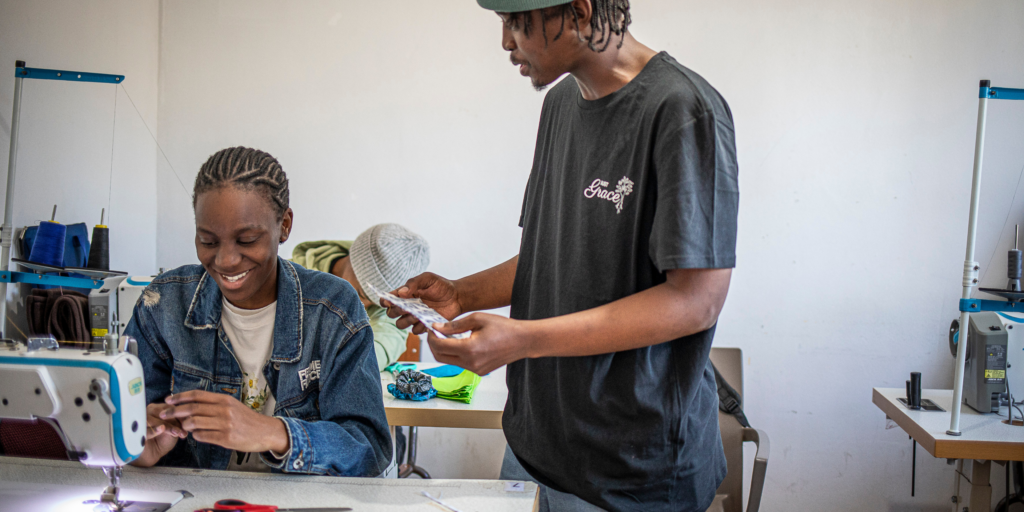
Asemahle Tinti: From a difficult gap year to a stable career in hospitality

When Asemahle Tinti joined Just Grace in 2023, she was going through a difficult period.

After successfully completing her first trimester at Northlink College, she was forced to leave when her NSFAS funding did not come through. Without the money to cover tuition or even transport to campus, continuing her studies was no longer possible.

“I felt lost, with no direction and no support. I wanted to study and build a future, but it felt like every door was closed.”

Worried and unsure of what to do next, Asemahle was looking for an opportunity to learn a practical skill and regain a sense of direction. That opportunity came when she discovered Just Grace.

Building skills and confidence

“When I heard about Just Grace, it felt like the opportunity I had been waiting for. A place where I could learn, grow, and finally take a step toward a better future” – she says.

Through Just Grace’s skills development programme, Asemahle trained as a barista, learning everything from preparing different types of coffee and steaming milk to latte art and customer service.

For her, however, the training represented much more than learning how to make coffee.

“The biggest impact was learning a practical skill that I could actually use to get a job. It gave me confidence because I went from feeling stuck to knowing I could make something with my own hands and serve people with pride.”

After completing the programme, that new skill quickly began opening doors.

From training to employment

Using her Just Grace certificate, Asemahle secured a barista position at the Cape Town International Convention Centre (CTICC) through Zest Agency in May 2024.

Just Grace also supported her application to Nukakamma Hospitality School, where her existing barista training helped her gain admission.

In April 2025, she began an intensive hospitality programme consisting of six months of training followed by a five-month internship. The programme prepared participants for employment opportunities with Club Med South Africa.

This year, Asemahle was able to relocate to Durban to take the next step in her career, where she now works as a barista at Club Med South Africa.

A future that feels possible

For Asemahle, the biggest transformation has been the change in what she believes is possible for her future.

“Just Grace changed my life because now I feel like I can go anywhere – even overseas.”

From being unable to continue her education and struggling to build a life for herself, she has gained professional experience and created a pathway into the hospitality industry.

“I went from feeling stuck and jobless to being skilled, working, and proud of what I do. Just Grace gave me direction, skills, and hope.”

She wants to share a message with those considering supporting Just Grace:

“Your support really does change lives. You’re not just giving training. You’re giving someone a future.”
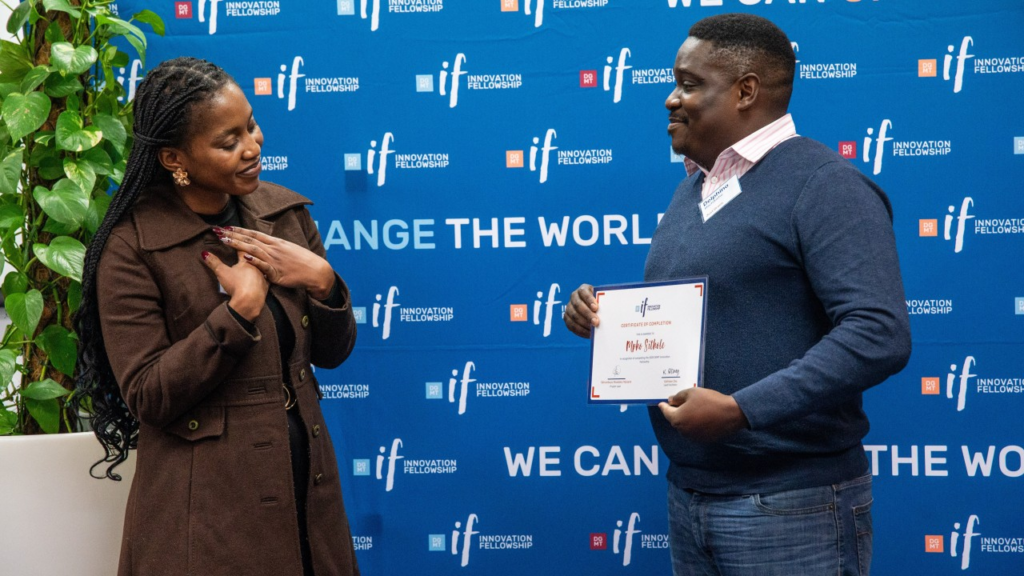
Mpho Sithole’s Fellowship Journey: A Reflection on Growth, Unlearning, Leading

My name is Mpho Sithole, Business Development Manager at Just Grace NPC, an organisation that has worked to empower the community of Langa since 2012 through skills development, psychosocial support, trauma-informed counselling, and after-school support, amongst other initiatives. I had been with the organisation for almost three years when I joined the Fellowship. Honestly, I didn’t know much about it – I applied because my director asked a colleague and me to. That “out of duty” application changed me in ways I couldn’t have imagined.

I remember walking into the first immersion with deadlines ringing in my mind, trying to recharge my social battery for a week that would be spent with strangers, and struggling to recall the innovation challenge we had put down at the application stage. The first immersion focused on us as individuals. For the first time, I observed myself and my thoughts almost from the outside – not with suspicion or problem solving, but with curiosity. I watched the thinker. So much of what I believed was challenged. I went home that Friday in what felt like an existential crisis, questioning everything I thought I knew. That was the start of my unlearning. 

That unlearning mattered. It allowed me to enter the sensing, envisioning, and offering phases without fixed assumptions, learning at every step. My “fellow fellow” kept me grounded, challenged my thinking, and helped me see my blind spots. I was grateful not to walk the journey alone.

Before leaving the first immersion, we set aside two hours each week to meet and reflect on the process. We blocked the time in our calendars and protected it as far as possible. If we had no choice but to miss a meeting, we made up the time later that same week. Be very intentional with every aspect of the process – the work and the resting.

The process was not easy. Many times, I caught myself allowing assumptions to get in the way. If you can, train yourself to notice when assumption is leading you, and practise stepping back from that position. It is not always easy, but talking things through with my fellow fellow strengthened that muscle and helped me recognise when I was operating from assumption during the process.

There were many moments of discomfort. Sometimes all I could do was sit in them and keep going. I remember asking our learning group leader if it would get easier (his laughter told us that it wouldn’t be). My coach helped me talk through both the discomfort and the growth and brought real clarity to so many areas I was working through. The advice I would give: be honest with your coach, and with yourself, in those sessions. That is one of the best investments you’ll make in this process.

The real shift came when I stopped seeing the Fellowship process as coming up with a solution for one organisational challenge (ours) and started seeing it as a catalyst for sectoral ones. So many of the fellows in our cohort were facing similar problems, and I realised our solutions could serve the sector, not just our own organisations. Because of the learnings during the process and wanting to not only continue them but also share them with others, we (Just Grace) incorporated some of what we learned directly into how our team works – using the Six Thinking Hats to structure how we discuss decisions, building ontological check-ins into our meetings, and talking more deliberately about the organisation as a living system rather than a fixed set of processes operating outside of each other/in silos. Becoming a better leader for Just Grace means I can help develop other leaders in our organisation who will also be better leaders across the sector – generative leadership lives in how we practise leadership daily.

My cohort became a genuine support system. My advice to current Fellows: forge real friendships (or something that resembles that) with your group. They understand exactly what you’re going through in a way few others can. Bounce ideas off each other, visit each other’s organisations if possible, and stay close – those relationships carry the learning forward once faculty is no longer there to hold you in the process. And once faculty is gone and the process ends, they’ll help keep things together. 

Investing fully in the Fellowship changes how you see yourself, your colleagues, your organisation, and the sector. I am not the same person I was when I started. I hope you won’t be either. There’s a whole sector waiting for the kind of leader this Fellowship can help you become.

Sive Silathi’s Journey to Top Achiever of the Matric 2025 Cohort

In South Africa, academic success is often shaped by more than what happens in the classroom. For many learners, the pressures of matric extend beyond exams — from navigating limited support systems to carrying the hopes of entire families. For young people facing these realities, the right support can make all the difference.

At Just Grace, we believe academic achievement is built through holistic support that nurtures not only performance, but confidence, wellbeing, and future aspirations. Through structured academic support, peer learning opportunities, study camps, cross-night sessions and mental health counselling, we aim to equip learners with the tools they need to thrive. Sive Silathi, top achiever of our 2025 matric cohort, is a powerful example of what is possible when that support is in place.

When Sive joined Just Grace, she was looking for academic support to help her reach her matric goals. What she found was much more. Through structured classes, camps with peers from across the country, and focused cross-night study sessions, she entered an environment that encouraged both academic and personal growth. Alongside this, access to mental health counselling helped ease the pressures of Grade 12 and provided crucial emotional support during a demanding year.

Sive’s results speak for themselves. She achieved an outstanding 83.9% average and six distinctions — a milestone she had worked hard toward and one that exceeded even her own expectations.

She credits Just Grace as a key part of that success, particularly the cross-night sessions that became some of the most productive and meaningful parts of her matric journey. Beyond academics, they helped her develop discipline and time-management skills she had previously struggled with.

With guidance from our dedicated programme manager, Sive also received support in planning her tertiary education and aligning her studies with her long-term career ambitions. That mentorship, she says, is something she will always be grateful for.

Receiving her final results was an emotional and deeply personal moment.

“It felt so surreal,” Sive shares. “I was shocked at first because I didn’t know I would achieve the exact goals I had written down. As time went by and it sank in, I realised I had done really well — I was the first in my family to achieve such a milestone. We are really breaking those generational curses.”

Her story reflects more than academic success. It is about determination, family legacy, and what it means when one achievement opens doors for generations to come.

This year, Sive begins the next chapter of her journey as she pursues an LLB degree at the University of Johannesburg, with the goal of becoming a Corporate Attorney. She hopes to excel academically and continue building toward a future shaped by purpose and ambition.

Sive’s journey is a powerful testament to what happens when young people are supported holistically — academically, emotionally, and personally. Her story reminds us that with the right guidance, opportunities and belief, young people can not only meet their goals, but exceed them.

At Just Grace, we are incredibly proud of Sive’s accomplishments. Her success is an inspiring reminder that education, paired with the right support, can be truly transformative.

Just Grace Annual Report 2025: Reflecting on a Year of Skills Development

We’re proud to share the Just Grace Annual Report 2025. It highlights a year where we doubled down on equipping young people and community members in Langa with the tools to navigate an increasingly competitive and uncertain future.

In 2025, we saw what’s possible when people are supported holistically. From a 90.6% matric pass rate to victims of GBV gaining independence and securing employment, the results speak for themselves.

Inside, you’ll find:

  • Concrete programme results such as an 84% activation rate in our Youth Activation Programme, with participants moving into employment, further education, or training often within weeks of completion
  • Insights into our skills development model, showing how technical training (barista, sewing, accounting) is combined with digital literacy, work-readiness, and psychosocial support to drive long-term employability
  • Education outcomes that go beyond academics, including a 90.6% matric pass rate, as well as measurable growth in confidence, motivation, and future readiness among learners
  • Real stories behind the data from young people gaining their first job to learners overcoming significant barriers and re-engaging with education
  • A deeper look at community realities, highlighting the structural challenges participants face, such as limited access to technology and low household income, and how our programmes respond to them
  • New and evolving initiatives, for example, a pilot programme supporting survivors of gender-based violence with skills training and pathways to economic independence
  • Financial transparency and sustainability efforts explaining how social enterprises like Cela Coffee and sewing initiatives contribute to long-term impact

Each number in the report represents real lives touched and real progress made.

We invite you to explore the full Annual Report 2025 and see the difference we’ve made together.

We are incredibly grateful to everyone who has been part of this journey. Your support and allow us to continue our mission and expand our impact.

The Impact of the Youth Development Programme, As Seen by the Learners

Many learners in South Africa receive education that falls short of the quality they deserve. Key challenges include overcrowded classrooms, insufficient resources, and disparities in access to quality education between urban and rural areas. These systemic issues contribute to high dropout rates and low matric pass percentages, underscoring the need for programmes like Just Grace’s Youth Development Programme (YDP).

Through our Youth Development Programme, we support learners in Langa throughout high school to help them progress into further education, training,  or employment. We make this possible by offering a variety of activities, including life skills and academic support to book clubs, computer training, leadership development, coding, job shadowing, and career guidance. On top of that, we provide youth with psychosocial support to help them overcome the mental health challenges that frequently stem from socio-economic conditions and difficult upbringings. 

Studies show that such holistic approaches that combine academic, after-school, and emotional support significantly improve learner retention and success. According to research summarized in “Afterschool Program Quality and Student Outcomes: Reflections on Positive Key Findings on Learning and Development From Recent Research,” high-quality learning programs offer a blend of academic and developmental activities, and promote student engagement, mastery of skills, and autonomy. Still, the true impact of YDP is best seen in the words of learners themselves.

HOur Youth Development Programme (YDP) helps learners reach their full potential and strengthen their technical and academic skills. 

The biggest skill I have gained from the programme is learning how to code,” shares Enkosi (Grade 11), while Owam (Grade 9) highlights learning to manage his study time more effectively. For Iyanda (Grade 9), the biggest value lies in soft skills, in particular collaboration: “The biggest skill I have gained from the programme is peer-to-peer learning and studying with learners from different schools.

But the YDP’s impact extends beyond hard and soft skills. 

For Grade 11 learner Bukhobenkosi, one of the most valuable lessons has been the ability to connect and communicate with peers from different schools. “Communicating with other learners from different schools,” he says, “has been the biggest skill I’ve gained from the programme.” 

That sentiment is shared by Grade 10 learner Somila, who adds, “The biggest skill I have gained from the programme is learning how to communicate effectively.

These stories paint a picture of a programme that blends personal growth with practical skill-building necessary for young people to advance academically and professionally. This is important because, as revealed by a recent study on employability competencies, intrapersonal competencies significantly influence interpersonal skills, which are essential for workplace communication and collaboration. This further proves that the development of both technical and interpersonal skills is crucial for improving youth’s employability and adaptability in South Africa’s job market.

In addition to teaching new skills. YDP changes learners’ perspectives and helps them have a clearer vision for their futures. 

“The programme has helped me improve academically and stay motivated and positive about my future,” says Bukhobenkosi, who credits the experience with helping him avoid procrastination and focus on what matters most. Enkosi agrees: “As a Grade 11 learner, the programme helps me become a better student and motivates me to succeed in the future.”

For Somila, the lessons have been deeply personal: “It has made me realise that everything I do has either positive or negative consequences

By participating in the programme, young people realise that success begins with the right mindset.

When asked to sum up what YDP means to them, the learners’ responses were heartfelt. 

“This programme gives me hope for my future and the future of my peers,” says Bukhobenkosi. Enkosi adds, “The programme motivates me to become the person I aspire to be.” For Somila, it’s a safe space that builds confidence: “It makes me believe I can be a better person. It provides a safe space where I can improve my academic performance.”

Finally, both Iyanda and Owam emphasise transformation and progress: from better marks to a brighter future. 

The Youth Development Programme is shaping the next generation of leaders, thinkers, and dreamers. Through mentorship, academic support, and creative learning opportunities, it provides young people with the ability to pursue their goals.

With South Africa’s youth unemployment rate exceeding 50% in some regions, programmes like YDP are essential for empowering young people to break cycles of poverty and contribute meaningfully to society’s future economic and social development.

Home Visits: Creating Lasting Change at the Heart of the Community

By Kasia Rybarczyk

At Just Grace, we understand that true community development begins at home. Through our Empilweni! Thriving Communities Programme and Phuhlisa! Learner Engagement Programme, our dedicated team of social workers frequently carry out home visits. These visits are crucial in delivering comprehensive psychosocial support services and forging deeper connections with the families and learners we serve.

Why Home Visits Matter

Home visits are more than just a service – they are a vital tool for understanding and addressing the unique challenges faced by families in vulnerable communities. By stepping into the environments where individuals and families live, our social workers can:

  • Assess the individual and family environment to identify specific stressors or support gaps.
  • Provide on-the-spot psychosocial support, build trust, and refer where needed.
  • Establish rapport and empathy – meeting in family homes helps social workers connect more deeply than in office-only settings.

These visits allow us to offer truly context-aware, compassionate support that leads to more meaningful and sustainable impact.

Research-Backed Benefits of Home Visiting

The importance of home visits is supported by research. A 2025 systematic review of 22 studies covering 18 different home visiting interventions found evidence that home visits can improve child mental health, socioemotional, and developmental outcomes. Importantly, these interventions targeted families with high vulnerabilities and complex needs, showing positive impacts on child cognitive and behavioral development.

Beyond benefits for children, home visits have positive impacts on parents and families as a whole. Research indicates families participating in home visiting are more likely to improve economic self-sufficiency because they engage more in vocational training and get connected to education and job training opportunities. These programs also help reduce parental stress and improve mental health, which leads to more positive parenting behaviors and creating stimulating home environments.

Additionally, another study highlighted the effectiveness of home visitis in reducing harsh parenting practices and lowering child abuse risk through improving parent-child interactions and providing psychological support.

These findings confirm that home visits serve as a critical foundation for safer, healthier, and more supportive home environments for vulnerable families.

Our Commitment to Holistic Support

At Just Grace, we are committed to addressing the root causes of challenges faced by individuals and families to achieve long-term positive change. Our home visits are part of a broader strategy to support families and learners holistically. By engaging closely with the community of Langa and understanding the context in which our beneficiaries live, we can grasp the unique social, economic, and personal contexts that affect them. This informed perspective allows us to tailor interventions precisely to their specific needs, whether through academic support, psychosocial counseling, life skills training, or career guidance.

Our approach does not only offer immediate relief through crisis intervention, but it primarily prioritises empowerment by building technical and soft skills alongside psychosocial support. This holistic support framework aims to reduce poverty, improve educational outcomes, create decent work opportunities, and create equal opportunities for all. Just Grace strives to help families and youth overcome adversity and thrive.

Moving Forward Together

As we continue our work in Langa, we remain committed to the practice of home visiting as a cornerstone of our approach. This commitment is embodied in key programmes like our Empilweni! Thriving Communities and Phuhlisa! Learner Engagement Programme. 

The Empilweni! programme addresses critical social challenges in Langa, including gender-based violence, crime, and substance abuse, by providing community members with psychosocial services such as counselling, social work, home visits, parent support groups, and safety planning. It empowers victims, fosters healing within families, and builds a culture of safety and respect through community awareness and life skills workshops. 

Complementing this, the Phuhlisa! Learner Engagement programme supports young learners throughout high school with home visits, counselling, career guidance, and life skills development to increase school retention and educational attainment. 

Together, these evidence-based initiatives exemplify Just Grace’s deep local understanding and strategic focus on addressing root causes while fostering resilience and opportunity in the Langa community. By meeting families where they are, we build trust, provide immediate support, and create pathways for lasting change.

If you’re interested in learning more about our programmes or how you can get involved, please reach out. Together, we can make a difference in the lives of those who need it most.

For more information on the studies mentioned, please refer to the following resources:

  • https://pmc.ncbi.nlm.nih.gov/articles/PMC12013050/
  • https://www.casey.org/home-visiting-programs/


CONTACT US

FOLLOW US

© Copyright Just Grace All rights reserved. 

Explored, Created & Strengthened By IconomySA ™